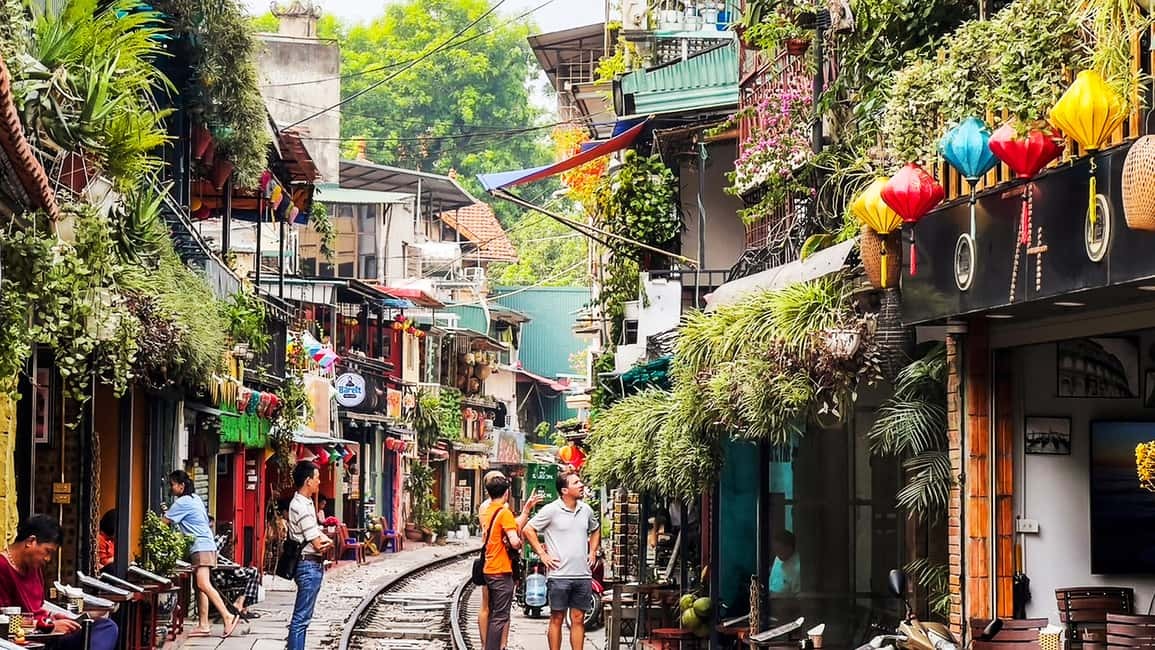
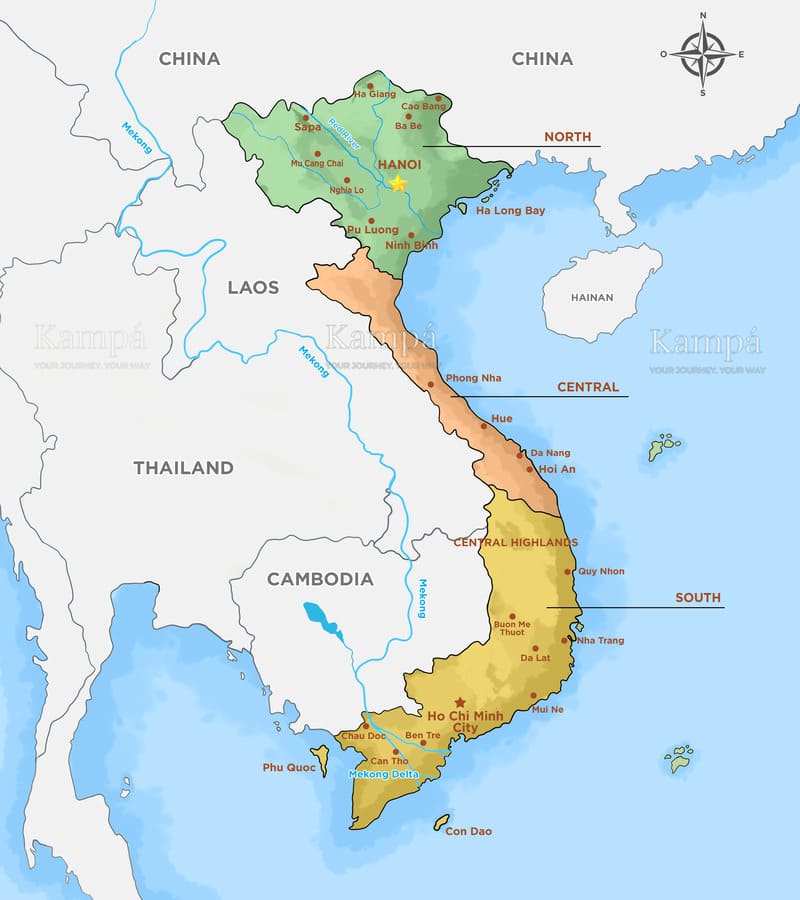





train street walk
History of Vietnamese Railways & Why Trains Are Popular With Tourists
🕰️ When Did Vietnamese Railways Begin?
-
The very first railway line in Vietnam — and in French Indochina — was started in 1881, linking Saigon and Mỹ Tho (about 71 km). dmsg.com.vn+2Báo Nhân Dân điện tử+2
-
The first official steam-train ride was recorded on 20 July 1885. Báo Nhân Dân điện tử+1
-
Over decades, the rail network expanded significantly. By 1936, long-distance rail across much of the country had been built. Báo điện tử Dân Trí+1
-
Railway has been an important part of Vietnam’s history — used for freight, passenger transport, and played roles during historical periods, including wartime. Pháp Luật Plus+1
Because of this long, storied past and its ties to national history, many travelers and locals alike appreciate rail not just as transport, but as a living symbol of Vietnam’s past and present.
Thanks to recent investments and improvements in service and comfort, train travel has again become attractive for tourists. dulichcongdoangiaoductphcm.com+1
🚂 Experiencing Train Culture — Why Tourists Love It
-
Travelling by train lets you see Vietnam up close — landscapes, countryside, mountains, small towns.
-
It’s often more relaxing than bus, especially on longer routes (sleeping cabins, scenic views, slower pace).
-
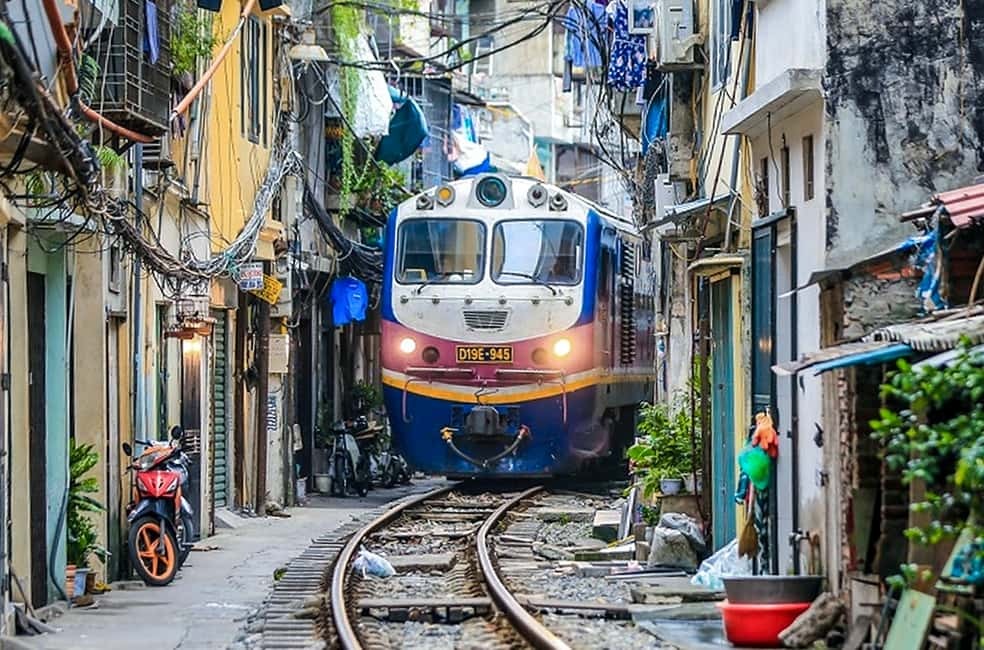
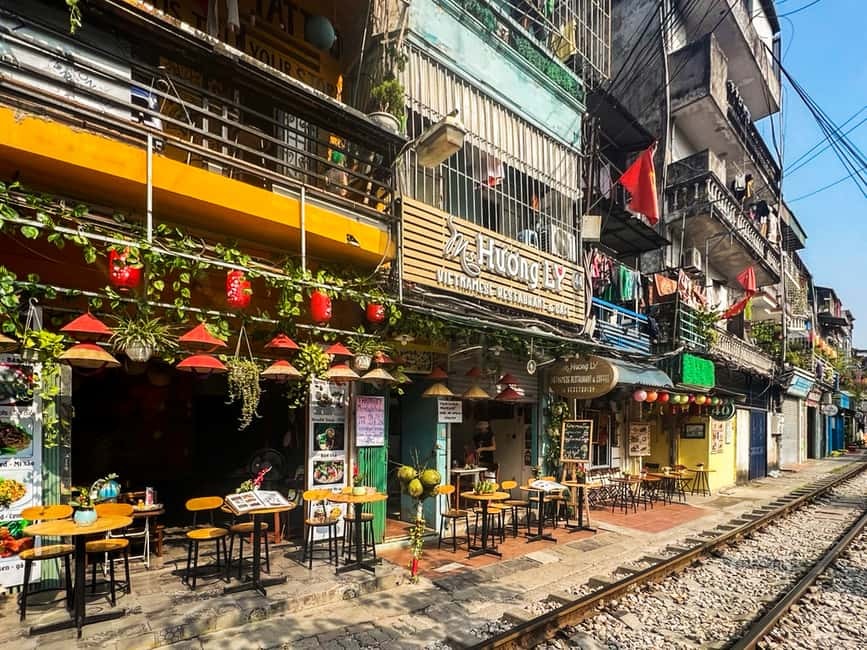
For many visitors, witnessing a train passing right through narrow old-quarter streets or beside cafés — like at Hanoi Train Street — is quite unique and photogenic.
-
It’s also nostalgic and culturally immersive: you get a sense of how rail connects past and present in Vietnam.
📍 Visiting Hanoi Train Street — When & How Trains Pass Through
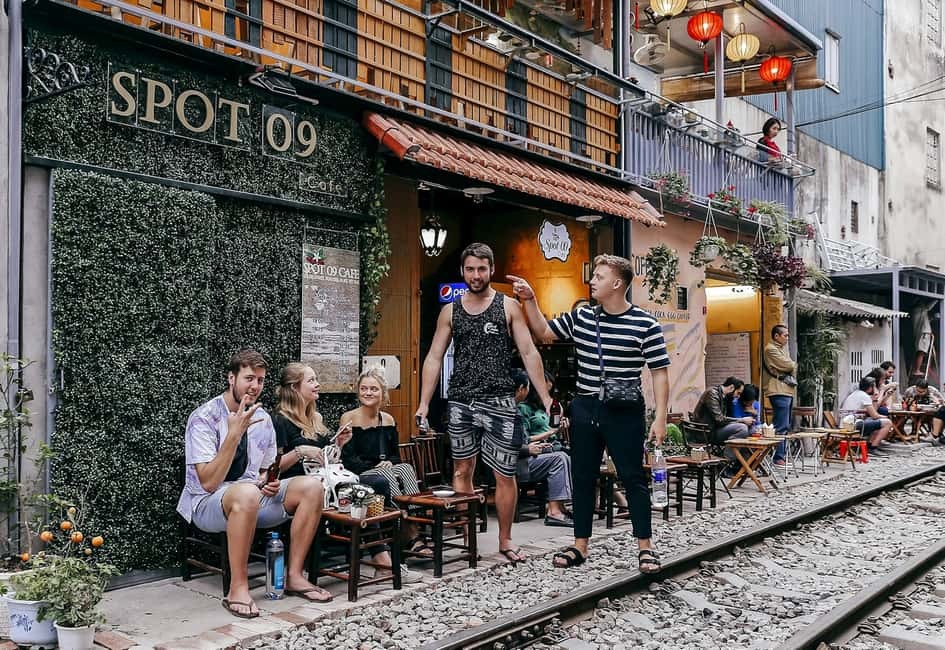
If you want to enjoy coffee or snacks and watch a real train pass by in central Hanoi, Hanoi Train Street is the famous spot. It runs through narrow alley sections — including Lê Duẩn and parts of the Old Quarter — where tracks pass just a few meters from houses and cafés. Wikipedia+2myvietnamtours.com+2
🕒 Typical Train Passing Times (2025 schedule)
Lê Duẩn section (Southern part of Train Street):
-
Daily around 3:30 PM and 7:30 PM. Where Tara Went+2myvietnamtours.com+2
Old Quarter / Phùng Hưng / Trần Phú section:
-
Weekdays (Mon–Fri): ~7:00 PM, 7:45 PM, 8:30 PM, 10:00 PM. myvietnamtours.com+2vmtravel.jubi.vn+2
-
Weekends (Sat & Sun): Multiple times — mornings around 9:15 AM, 11:20 AM; afternoons ~3:20 PM, 5:30 PM; then evening times similar to weekdays (7:00 PM, 7:45 PM, 8:30 PM, 9:00 PM, 11:00 PM) depending on the day. Kampá Tour+2AsiaMystika+2
💡 Important: Schedule might change — trains can be slightly early or late. It’s always best to arrive 20–30 minutes before the expected time and confirm at a nearby café or with local signage. Where is Mai+1
✅ What to Know Before Visiting — Tips for Tourists
-
The street is narrow and the train passes very close to houses and cafés. Safety matters — follow café staff guidance, keep a safe distance, and stand behind lines or barriers.
-
Entry is usually free, but it’s courteous (and often required) to buy something (drink or snack) from the café where you sit. Where is Mai+1
-
Because the schedule can change, check with locals or café staff on the day.
-
The atmosphere is different day vs night: afternoon trains around 3:30 PM are great for photos with daylight; evening trains give a moody, dramatic vibe with house lights and nighttime ambiance.
📝 Summary
Vietnamese rail has a long, proud history — originating in the 1880s and evolving through colonial times, war, and modern development. Rail travel remains a meaningful way to experience the country’s landscape and culture.
For visitors to Hanoi, Hanoi Train Street offers a unique blend of everyday life + railway heritage. With a little planning — checking train times, arriving early, and staying safe — you can enjoy a memorable experience of sipping coffee as a real Vietnamese train rolls through historic old-quarter alleys.